Home/Porcelain Veneers in NYC/Veneers vs. Bonding vs. Crowns

Veneers vs. Bonding vs. Crowns

Veneers vs. Bonding vs. CrownsThe right choice depends on your goals, your tooth structure, and what the case truly requires.

Veneers, bonding, and crowns can all improve a smile, but they are not interchangeable. Each option solves a different kind of problem, asks something different of the tooth, and delivers a different balance of aesthetics, durability, and conservation.

The best treatment is not the one that sounds most appealing in theory. It is the one that fits your anatomy, your bite, and the level of change the case calls for.

Composite Bonding

Composite bonding uses tooth-colored resin to refine shape, close small spaces, soften minor irregularities, or repair chips. In the right situation, it can be a very effective and conservative option — especially when the changes are modest and the enamel is healthy.

Bonding is often best when the goal is selective improvement rather than a broader redesign.

Pros of Bonding

  • Often the most conservative option
  • Can be completed quickly in the right case
  • Usually lower in cost than ceramics

Limitations of Bonding

  • More prone to staining and surface wear over time
  • Can chip more easily under heavier bite forces
  • May require maintenance, polishing, or touch-ups sooner than porcelain

Porcelain Veneers

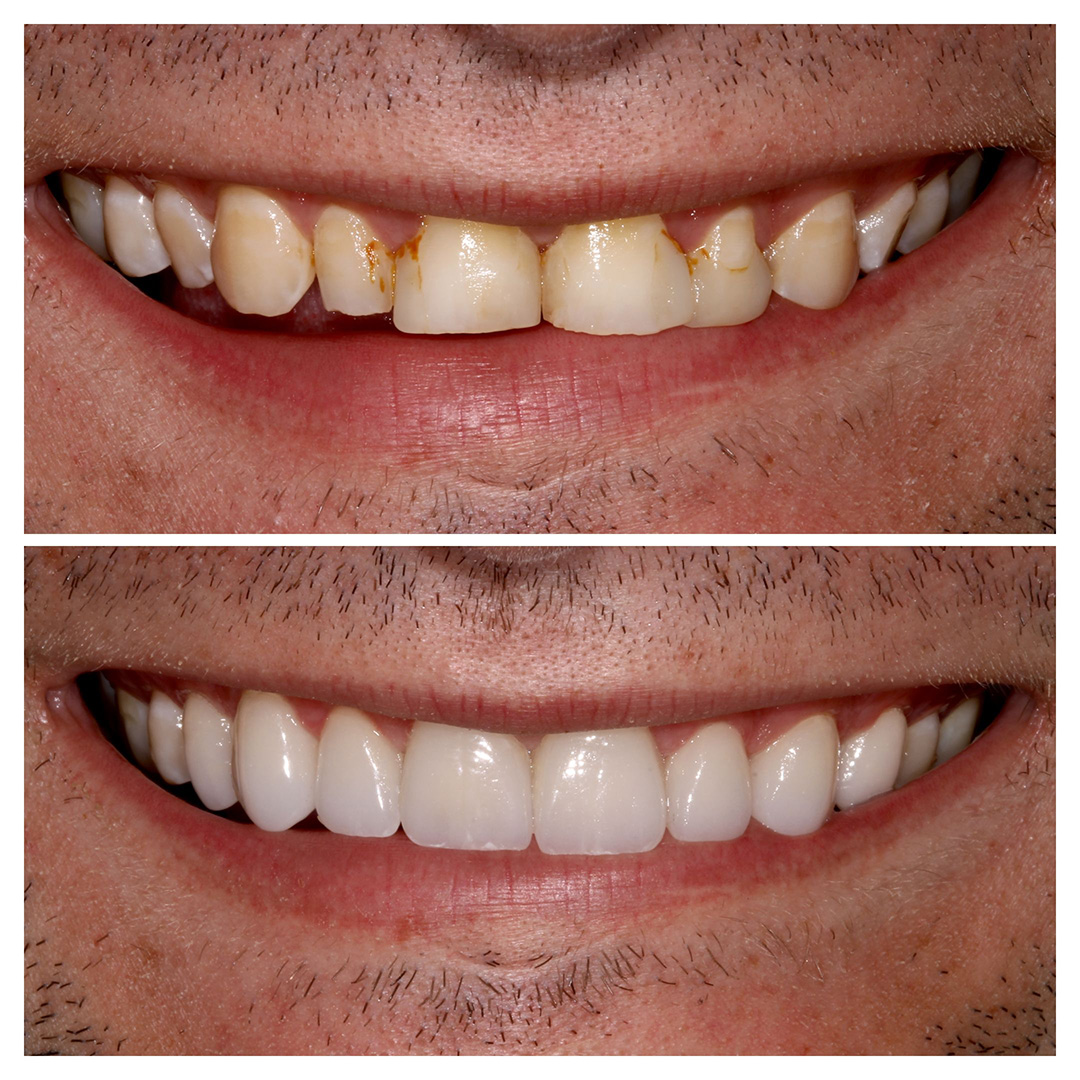
Porcelain veneers are custom ceramic restorations bonded to the front of the teeth. When properly planned and executed precisely, they can create a refined, cohesive result with excellent control over shape, proportion, translucency, and surface detail.

They are often chosen when the goal is not just to repair a small area, but to elevate the overall smile in a way that feels natural, stable, and intentionally designed.

Why Patients Choose Veneers

  • More stain resistant than composite
  • Porcelain reflects light in a way that more closely resembles natural enamel
  • Excellent control of shape, proportion, and surface texture
  • Predictable, cohesive results across multiple teeth

Porcelain veneers are often the right choice when patients want a polished, long-term result that still looks believable.

What Veneers Require

  • Careful planning and design
  • Precise execution and strong communication with the laboratory
  • A conservative approach that respects enamel, function, and bite

Crowns

Crowns cover the entire tooth and are typically recommended when structural strength is the priority. They are not simply a more powerful cosmetic option. They are a restorative solution used when a tooth needs full coverage to function predictably.

Crowns may be the right choice for teeth with significant decay, fractures, root canal treatment, large failing restorations, or compromised enamel.

When Crowns Are Necessary

  • Significant structural damage or decay
  • Teeth with large existing restorations that weaken long-term strength
  • Functional rehabilitation when full coverage is required

Tradeoffs to Understand

  • Usually require more tooth reduction than veneers
  • Driven first by structural and functional needs, with aesthetics built around that decision

How Dr. Kosdon Recommends the Right Option

The recommendation follows the plan — not the other way around. During your consultation at our Manhattan office, Dr. Michael Kosdon evaluates enamel condition, bite forces, gum health, existing restorations, and the level of change you want to make.

If a conservative option can deliver the right result, it will be discussed. If porcelain offers the most stable and refined long-term solution, the reasoning behind that recommendation will be explained clearly. And if a tooth needs full coverage for structural reasons, that decision is made to protect the tooth first.

The goal is not to fit every patient into the same treatment category. It is to choose the option that solves the problem correctly, preserves what should be preserved, and produces a result that belongs.